Wellmark® Website Redesign
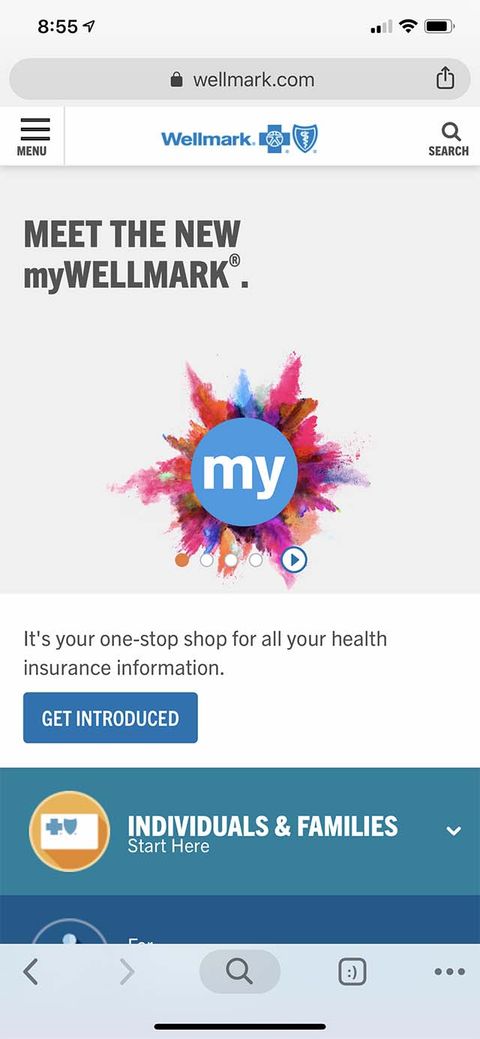
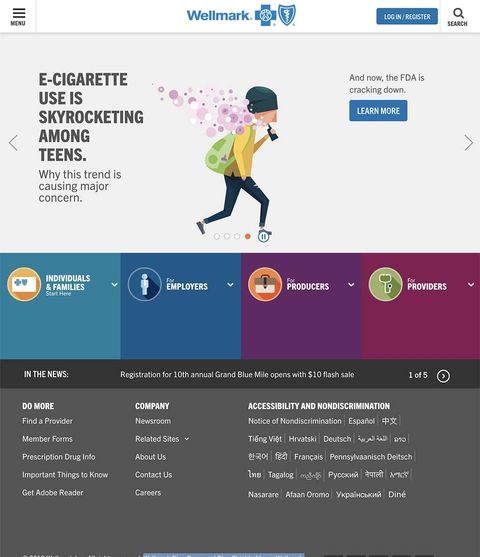
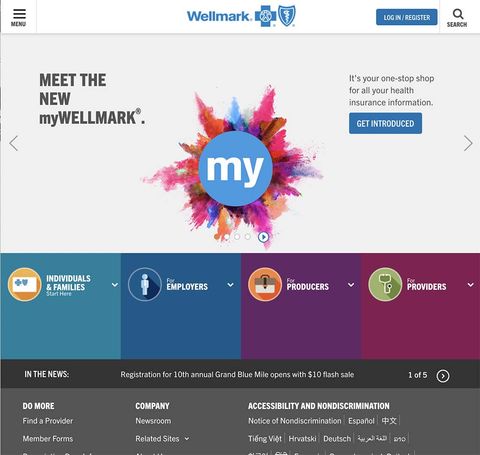
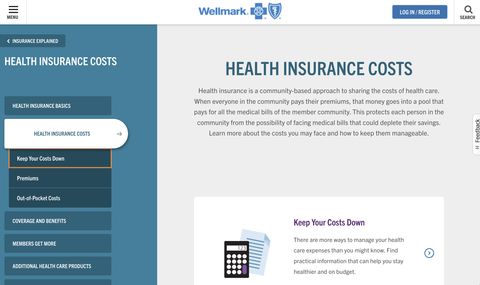
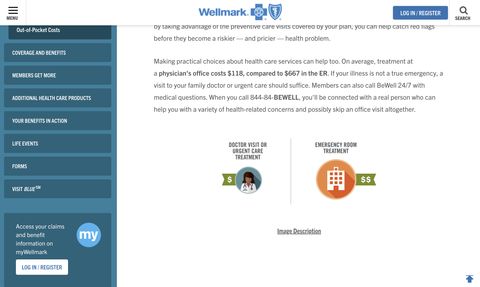
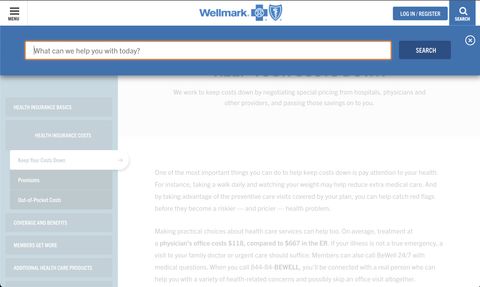
Full site redesign of the Wellmark® Blue Cross Blue Shield website to WCAG 2.0 Level AAA — the highest accessibility compliance tier. Six highly interactive component types (carousel, menus, tabs, video, forms, accordions) architected to full ADA compliance across responsive breakpoints, passing JAWS, NVDA, VoiceOver, axe, WAVE, and third-party audit. Delivered on schedule in six months.

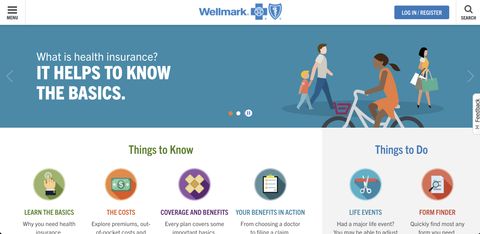
MXM brought INNOV8 in to lead the frontend architecture for a full Wellmark® Blue Cross Blue Shield website redesign — new design, new architecture, new content structure — with WCAG 2.0 Level AAA accessibility compliance baked in from the first architectural decision. INNOV8’s role was frontend lead: designing the component system, implementing alongside the MXM team, and owning the ADA compliance posture end-to-end.
The Wellmark relationship ran through the same MXM premier vendor arrangement that powered the Ford website redesign, the Rust-Oleum redesign, and Chuck E. Cheese’s — a trust relationship that gave INNOV8 lead-architect standing on MXM’s most technically demanding engagements.
Why AAA matters
Most accessible websites target WCAG 2.0 Level AA — the legal safe harbor for ADA compliance, the minimum bar for federal procurement, the level that most enterprise accessibility audits check against. Wellmark’s requirement was WCAG 2.0 Level AAA: the highest tier in the standard, covering a significantly broader set of success criteria around cognitive load, language clarity, error prevention, and interaction timing in addition to the baseline AA mechanical requirements.
For a healthcare insurance property — where users include patients managing chronic conditions, elderly members who rely on assistive technology, and individuals under stress navigating benefit claims — AAA isn’t overcorrection. It’s the actual standard the audience needs.
The component engineering
Six families of interactive components had to reach full AAA compliance, and each presented its own category of accessibility problem:
Carousel — the carousel’s challenge is state management: when a user navigates slides via keyboard, focus needs to move predictably, the live region needs to announce the current slide, and auto-advance (if any) needs to stop when the component has focus. Building a carousel that passes JAWS, NVDA, and VoiceOver is harder than it looks — the DOM manipulation required to animate transitions creates a class of problems where screen readers can announce stale content.
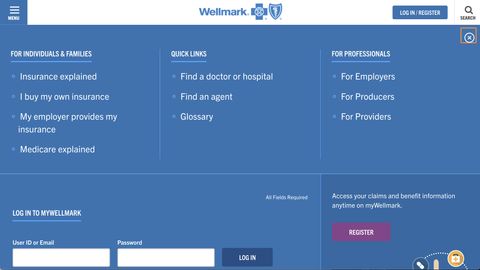
Navigation menus — multi-level dropdown menus are a classic WCAG minefield. Keyboard trap handling, aria-expanded
state propagation, Escape key dismissal that returns focus to the trigger, and correct ARIA roles on the menu
hierarchy all had to be implemented correctly. On a responsive breakpoint where the same navigation re-renders as a
mobile menu, the state model had to work in both contexts.
Tabs — role="tablist" / role="tab" / role="tabpanel" with correct aria-controls, aria-selected, and
tabindex management. Tab components look straightforward until you add keyboard arrow navigation and realize that
focus and selection are different things in the ARIA spec.
Video player — video is one of the harder components to make accessible: custom controls need to be keyboard operable, captions need to be available, the timeline scrubber needs to work via keyboard, and the whole control surface needs to be navigable by screen readers without the reader losing its position in the surrounding content.
Forms — Wellmark’s forms included insurance enrollment and provider search — high-stakes transactional surfaces
where an accessibility failure isn’t a UX inconvenience, it’s a locked door for the user. Field association, error
announcement via aria-describedby, inline validation that doesn’t disrupt screen reader flow, and timeout warnings all
had to be handled correctly.
Modal dialogs — focus trap inside the modal, aria-modal, focus return to the trigger on close, and Escape key
handling. Modals are one of the most commonly broken patterns in production accessibility — the keyboard trap
requirement in particular is frequently missed.
All six component families had to work at every responsive breakpoint, because mobile accessibility compliance carries its own requirements: touch target sizes, appropriate zoom behavior, and correct behavior under iOS VoiceOver and Android TalkBack as well as the desktop screen readers.
Testing and verification
The compliance verification stack covered the full range: automated tools (axe, WAVE, Tenon), manual keyboard traversal of every interactive surface, screen reader testing across JAWS, NVDA, and VoiceOver, and a third-party accessibility audit that served as the final gate before launch. Wellmark and MXM both required the audit clearance before the site went live.
The site cleared every gate. Nothing failed JAWS.
Delivery
The engagement ran December 2015 through June 2016 — six months from kickoff to launch, on schedule. The site launched cleanly and the client was satisfied. Wellmark’s site has since been refreshed in a subsequent rebuild, but the 2016 version set a compliance standard that was uncommon for healthcare properties at the time, and the component architecture INNOV8 built passed every audit it was put through.
The Wellmark engagement is the most technically demanding accessibility work in the INNOV8 portfolio — not because the technology was novel, but because AAA compliance at full responsive breadth, across six complex component families, with a real-world healthcare audience depending on it, is genuinely hard. The MXM team and INNOV8 got it right.

Have something worth building together?
INNOV8 is currently focused on Phlip — but selectively open to the right next chapter. If the work here resonates with what you're trying to build, get in touch.